A Comprehensive Overview of Current Trends and Implications About AI
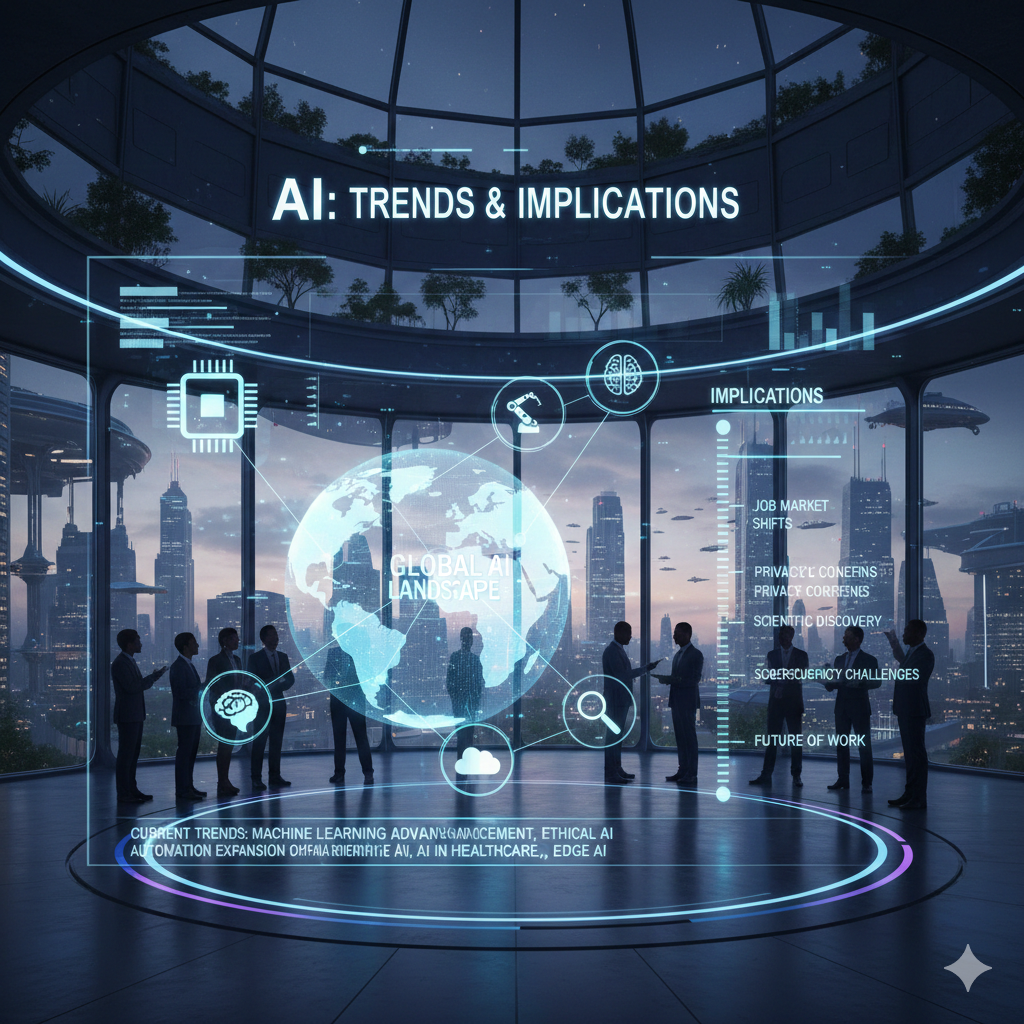
Artificial Intelligence (AI) has transitioned from a niche technology to an integral part of many industries and everyday life, impacting how we work, communicate, and make decisions. This article aims to provide a consolidated view of AI’s implications on society, drawing insights from various sources, and offering an analysis of these trends.
1. AI in the Workforce
One of the most discussed areas where AI impacts individuals is in the workforce. Research from McKinsey suggests that by 2030, up to 375 million workers may need to switch occupational categories due to automation. This raises critical questions about job displacement, workforce retraining, and the future of work.
However, AI is not solely a threat; it also creates opportunities. For instance, a report from PwC indicates that AI could lead to a net increase of 7.2 million jobs in the U.S. by 2037. These positions will likely require skills that complement AI, emphasizing the importance of education and lifelong learning.
2. AI in Healthcare
The healthcare sector is another area experiencing profound changes due to AI. According to a study published in the Journal of Healthcare Informatics Research, AI algorithms have shown the potential to diagnose diseases with accuracy comparable to human experts. This enables early detection and personalized treatment, particularly in fields like radiology and pathology.
However, the integration of AI in healthcare raises ethical concerns, particularly around data privacy and consent. The ongoing discussions in the industry highlight the need for regulations that ensure the responsible use of AI technologies.
3. AI and Personalization in Marketing
In marketing, AI is dramatically reshaping how companies engage with consumers. With algorithms analyzing user behavior, businesses can create highly targeted ads and personalized content, leading to increased engagement and conversion rates. A report from Deloitte suggests that companies leveraging AI in their marketing strategies see 10% higher customer satisfaction.
While effective, this personalization can lead to concerns over manipulation and the loss of consumer privacy. The advent of AI-driven marketing strategies necessitates a balance between utilizing data analytics and respecting user consent.
4. AI Ethics and Governance
As AI continues to permeate various sectors, the discourse around AI ethics has gained momentum. The European Union has taken proactive steps by proposing the AI Act, which aims to establish a framework for regulating AI, emphasizing responsible use and transparency.
Insights from thought leaders like Timnit Gebru highlight the need for developing AI systems that are not only effective but also fair and accountable, incorporating diverse datasets to prevent biases. As AI technologies evolve, robust governance frameworks will be essential to ensuring that they benefit society at large.
5. The Future of AI and Human Interaction
Looking to the future, the relationship between humans and AI is poised to evolve significantly. As machines become more adept at performing tasks traditionally handled by humans, there is a philosophical question emerging: how will our roles and identities change in a world where AI can replicate many aspects of human life?
Research by Stanford University’s Human-Centered AI Institute suggests that a collaborative future, where AI acts as an augmented partner rather than a replacement, may hold the key to harnessing its full potential. This collaborative approach emphasizes the importance of human judgment, emotional intelligence, and creative problem-solving—skills that AI has yet to fully emulate.
Conclusion: Embracing the AI Revolution
The implications of AI are vast and multifaceted, affecting various domains from employment to ethics and daily interactions. While the potential benefits are substantial, it is crucial to navigate the emerging challenges responsibly. Continuous dialogue among stakeholders—including technologists, governments, businesses, and communities—is essential to ensure that AI enhances human capability and contributes to a better quality of life.
In conclusion, as AI becomes increasingly embedded in our lives, understanding its potential, preparing for its implications, and engaging in its ethical governance will be vital for individuals and society as a whole.