 The Problem-First Solutions Approach Using AI: A Comprehensive Guide
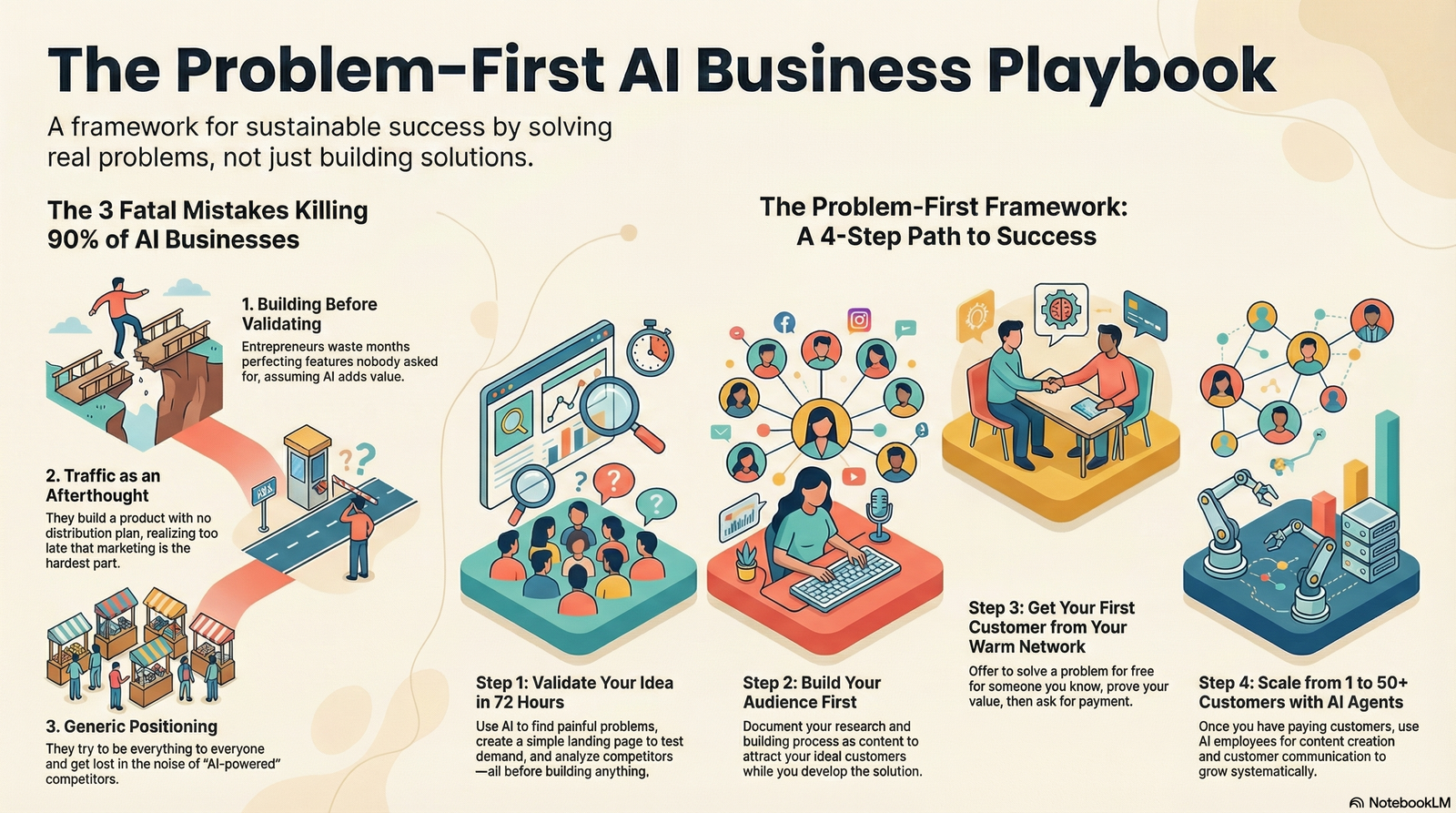
In today’s rapidly evolving technological landscape, organizations are increasingly turning to Artificial Intelligence (AI) to address complex business challenges. However, a common pitfall is the “solution-first” mindset, where companies rush to implement AI technologies without fully understanding the problems they aim to solve. This approach often leads to misaligned investments and suboptimal outcomes. To mitigate this, the “Problem-First Solutions Approach” has emerged as a strategic framework that emphasizes identifying and understanding the core issues before deploying AI solutions.
What Is the Problem-First Solutions Approach?
The Problem-First Solutions Approach is a methodology that prioritizes a deep understanding of the business problem before selecting and implementing AI technologies. This approach ensures that AI initiatives are directly aligned with organizational goals, leading to more effective and impactful outcomes.
The Pitfalls of a Solution-First Approach
Adopting a solution-first mindset can result in several challenges:
- Misaligned Objectives: Implementing AI without a clear understanding of the problem can lead to solutions that don’t address the actual needs of the business.
- Resource Misallocation: Investing in AI technologies that aren’t suited to the problem can lead to wasted resources and missed opportunities.
- Inadequate Results: Without a clear problem definition, AI solutions may fail to deliver the desired outcomes, leading to frustration and diminished trust in AI initiatives.
Steps to Implement the Problem-First Solutions Approach
To effectively apply the Problem-First Solutions Approach, organizations can follow these steps:
- Identify Specific Operational Pain Points: Begin by pinpointing areas where workflows are bottlenecked or processes consume disproportionate resources. (wozdigital.ai)
- Quantify the Business Impact: Assess the potential benefits of solving the problem, such as cost reduction, revenue generation, or risk mitigation.
- Evaluate AI’s Suitability: Determine if AI’s capabilities, like processing unstructured data or recognizing patterns, can effectively address the identified challenge.
- Engage Domain Experts: Involve individuals who deeply understand the business context to shape AI implementations, ensuring solutions are grounded in real-world needs.
Benefits of the Problem-First Approach
Adopting this approach offers several advantages:
- Enhanced Alignment: Ensures AI solutions are directly tied to business objectives, increasing their relevance and effectiveness.
- Optimized Resource Utilization: Focuses efforts on areas with the highest potential impact, leading to more efficient use of resources.
- Improved Outcomes: By addressing the right problems, organizations are more likely to achieve successful and sustainable AI implementations.
Real-World Applications
Several organizations have successfully implemented the Problem-First Solutions Approach:
- Microsoft: Emphasizes framing the problem correctly by asking the right questions, leading to AI solutions that are more likely to meet business needs. (microsoft.com)
- LevelUp Labs: Utilizes a proprietary Continuous Calibration/Continuous Development (CC/CD) Framework, focusing on iterative solution design and continuous calibration tailored to AI systems’ unpredictable behavior. (levelup-labs.ai)
Challenges and Considerations
While the Problem-First Solutions Approach offers significant benefits, organizations may encounter challenges such as:
- Complex Problem Definition: Clearly articulating the problem can be difficult, especially in complex or ambiguous situations.
- Stakeholder Alignment: Ensuring all stakeholders have a shared understanding of the problem and its implications requires effective communication and collaboration.
- Resource Constraints: Allocating time and resources to thoroughly understand the problem may be challenging, particularly in fast-paced environments.
Conclusion
The Problem-First Solutions Approach is a strategic framework that prioritizes understanding the core business problem before implementing AI solutions. By focusing on the problem first, organizations can develop AI initiatives that are more aligned with their objectives, leading to more effective and impactful outcomes. This approach not only optimizes resource utilization but also enhances the likelihood of successful AI adoption, ensuring that technology serves as a tool to solve real-world business challenges.